



⏱️ Reading time: 3 to 4 minutes
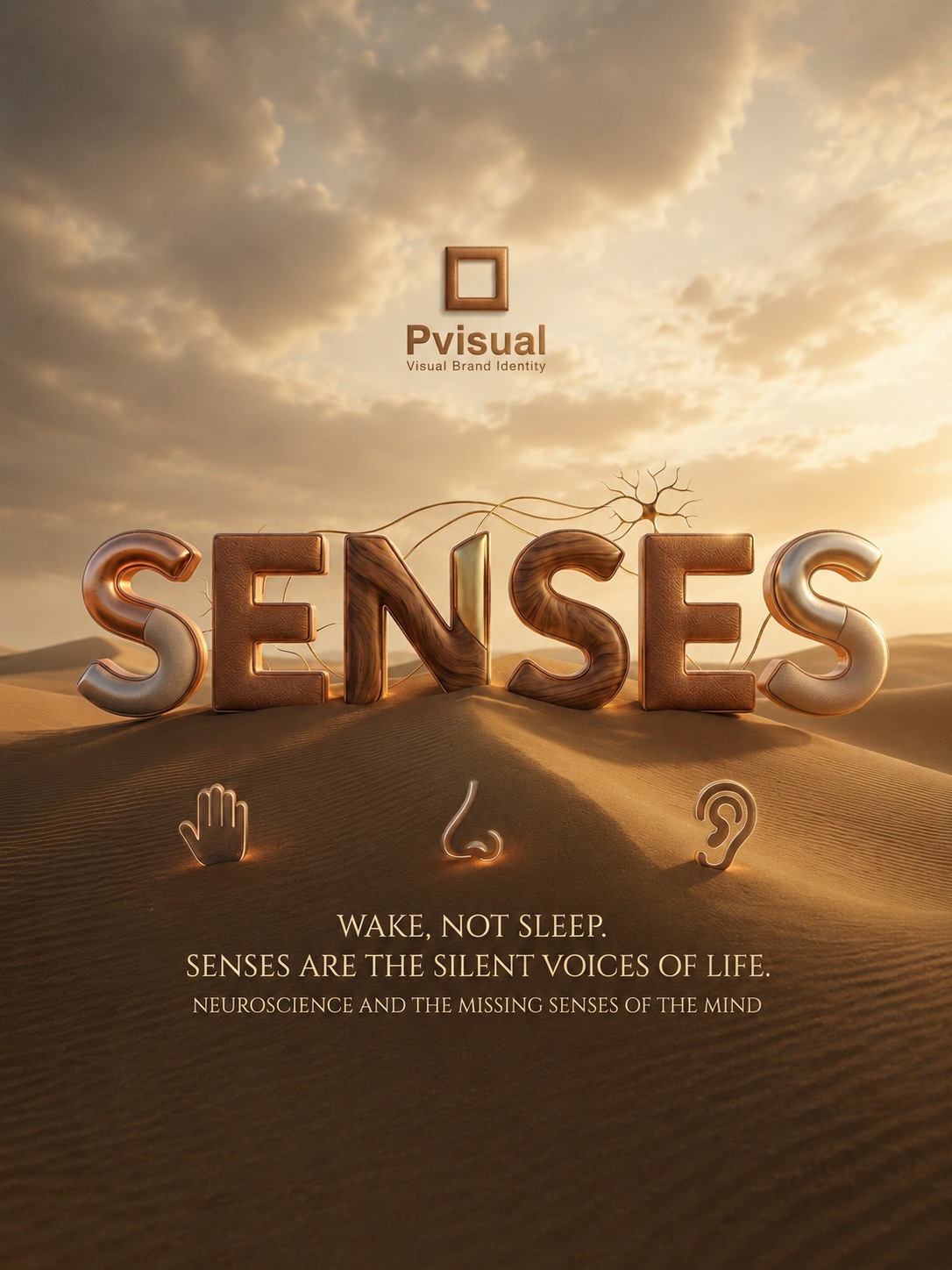
Introduction:
Visual Overload and the Deaf Ear
Every day, an urban human is bombarded with over 5,000 advertising messages. The result? Our brain builds a powerful filter: “ad blindness.”
Banners go unseen, videos are ignored. The advertising industry is stuck in a dead‑end race for “the loudest shout.” But the latest findings in neuroscience say: The real winner is not the brand that sends the most data, but the one that awakens the deepest sensation.
The novel argument of this article is this: The true power of the five senses lies neither in isolation nor in omni‑perception. The power lies in the orchestrated interplay of the “lost senses” – the senses that, in the digital age, the brain has grown “hungry” for: touch, smell, and proprioception (balance).
Part One: Beyond Seeing & Hearing – Forget the Brain’s Coupon
Traditional advertising relies on “eye and ear.” Yet 75% of our emotions are processed through smell, touch, and taste (neuromarketing data).
Interestingly, in the screen age, these three senses have remained “underemployed.” To fill this void, the brain sends any new stimulus in this domain directly, without filtering, to the emotional memory centres (amygdala and hippocampus).
- Smell – Your Personal Time Machine
A single scent (e.g., fresh bread or vanilla) can reconstruct a 20‑year‑old memory with 4K clarity. Smart brands (like hotel chains) have an “olfactory signature.”
In a simple print ad, if you can embed a layer of fragrance (using microcapsule technology), brand recall increases by up to 50%.
- Touch – The Hidden Credibility Cue
When a luxury car catalogue is printed on paper that mimics the leather texture of the car’s actual seats, the brain is tricked: “I’ve touched this, so it’s real.” This “sensory error” boosts purchase intent by 25%.
Part Two: Neuroscience Steps into the Sensory Court
New research reveals: “multisensory” integration – a harmonious blend of three or four senses – produces a neural response three times stronger than the simple sum of individual sensory inputs. This phenomenon is called “supramodal convergence.”
An innovative, cross‑cultural example:
An energy drink ad in a busy subway station. Not a banner, but:
- A vibrating floor surface (proprioception / balance) that mimics a racing heartbeat.
- A faint citrus‑and‑ice aroma released from above (smell → freshness).
- The familiar sound of a can opening (hearing → anticipation).
- A flickering blue light (sight → energy).
The result: The passer‑by *feels thirsty and tired* without knowing why. He walks to the store because his brain believes “the body needs that drink.” No slogan, no explicit message – only physiological sensory manipulation.
Conclusion: For Professionals (and a Simple Truth for Everyone)
For brand managers and advertising professionals:
- The “information broadcast” strategy is dead. Move toward “experience construction.”
- Redefine your ad budget: balance “eye & ear” with “smell & touch.”
- Meet with product designers, not just animators. Your audience has hands and a nose, not just eyes.
For the general public (simple, universal message):
The most deceptive ad is not the one that lies. It is the one that, without saying a word, speaks to your body.
From today, when you smell coffee in a clothing store, or feel a soft texture on a street billboard, be aware: it’s not a coincidence. It is the “golden silence” of the senses, silently signing your next purchase order without asking.
- Final word:
In a world filled with digital noise, the “silent senses” speak the loudest. The winning brand does not write its product into the mind – it plants it into the senses.